Raja Ampat Manta Ray Yacht Charter: A Definitive Guide
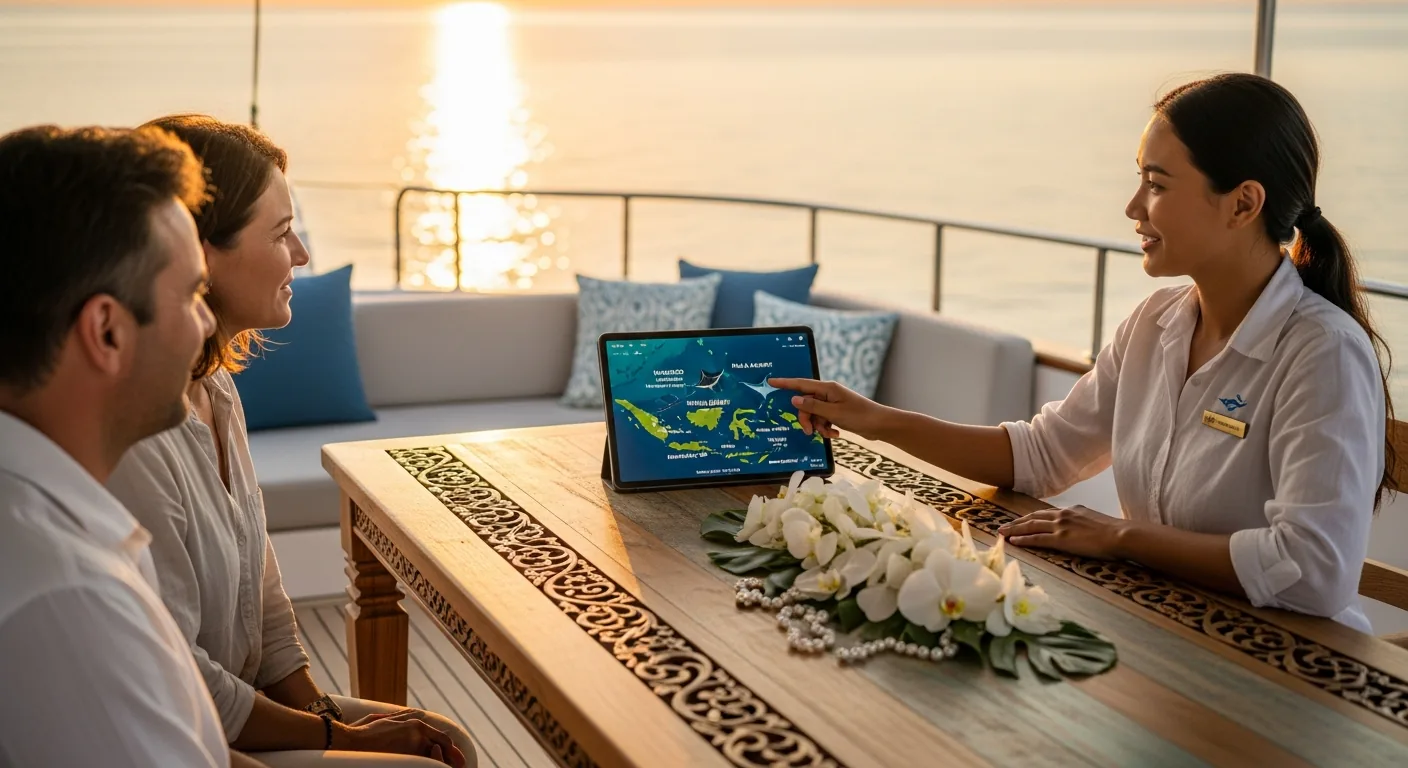
The water shifts from sapphire to a translucent turquoise as the dive tender cuts its engine. Below, a collection of coral bommies rises from the white sand floor, a cleaning station known to every reef manta in the Dampier Strait. The air, thick with the scent of salt and distant tropical foliage, is silent but for the gentle lap of water against the hull. This is Manta Sandy. It is not an overture; it is the main performance. Here, and at sites like Magic Mountain and Eagle Rock, the complex ballet of manta rays unfolds daily. A private manta dive charter is not about simply observing this spectacle; it is about positioning oneself at its very heart, with the time and expertise to appreciate its nuance. This is the specific focus of a Manta Ray Yacht Charter Indonesia expedition in Raja Ampat—a curated exploration of the world’s most significant manta ray aggregations, far from the standard circuit. See also: Home pricing.
Operating from October through April, our dedicated manta cruise in Raja Ampat aligns with the peak season for calm seas and high manta ray activity. The region, an archipelago of over 1,500 jungle-clad islands off West Papua, sits at the epicenter of marine biodiversity. While its coral gardens are legendary, for the serious marine wildlife enthusiast, the true draw is the reliable presence of both Reef Manta Rays (Manta alfredi) and the larger, pelagic Oceanic Manta Rays (Manta birostris). Our itineraries are designed around the behavior of these animals, using two decades of local knowledge to place our guests at the right site, at the right tide, for the most profound encounters.
The Manta Sanctuaries of Raja Ampat: An In-Depth Analysis
Raja Ampat presents a collection of dive sites that have become synonymous with manta ray congregations. A successful manta yacht in Indonesia requires more than just coordinates; it requires an intimate understanding of the lunar cycles, currents, and plankton movements that govern these gatherings. Our expedition leaders and dive guides, each with a minimum of 5,000 logged dives in these specific waters, possess this granular knowledge. We focus our itineraries on three keystone locations, each offering a distinct type of encounter. See also: Contact pricing.
Manta Sandy
Located in the Dampier Strait, Manta Sandy is arguably the most consistent site for observing the intricate social behavior of Reef Mantas (Manta alfredi). The site itself is a shallow, sandy amphitheater, with a maximum depth of 18 meters (59 feet), though the primary action occurs between 10 and 15 meters. Two large coral bommies serve as the primary cleaning stations. Divers are positioned behind a line of rocks, a respectful 10 meters from the stations, to observe the mantas as they approach. It is here that one can witness a queue of up to 25 individual mantas, patiently waiting their turn to be serviced by cleaner wrasse. The visibility, typically ranging from 15 to 20 meters, and the gentle slope make this an accessible site for certified divers of varying experience levels. Our charters often dedicate two full dive days here, allowing photographers to capitalize on the morning and afternoon light, which dramatically alters the atmosphere of the site. We have identified over 150 individual mantas at this site alone through the Manta Trust’s photo-ID database since 2017.
Magic Mountain (Karang Bayangan)
Further south, in the Misool region, lies Magic Mountain. This is not a cleaning station but a vibrant, submerged seamount, a pinnacle of marine life that attracts pelagics from the deep. The top of the reef sits at just 7 meters (23 feet), descending in terraces to depths well beyond 40 meters. It is one of the few places on Earth where both Reef and Oceanic Manta Rays are seen together. The Oceanics, with wingspans reaching over 5 meters, are drawn to the cleaning stations on the pinnacle’s peak, while Reef Mantas often feed in the currents along its flanks. The currents here can be formidable, requiring advanced diving skills and precise timing, which is a core competency of our manta dive charter operations. A dive plan at Magic Mountain often involves a negative entry to descend quickly to a strategic point on the reef before the current takes hold. The reward is a dynamic panorama: squadrons of fusiliers, schooling barracuda, Napoleon wrasse, and, of course, the mantas gliding effortlessly through the blue. Water temperatures here average 28°C (82°F) year-round. See also: details on Manta Sites Komodo.
Eagle Rock
In the Kawe region, straddling the equator, Eagle Rock offers a wilder, more expeditionary diving experience. This pair of rocky islets is exposed to the open ocean, resulting in powerful currents and nutrient-rich upwellings. This is a feeding aggregation site. During the new and full moon phases, plankton blooms attract dozens of Reef Mantas. They engage in cyclone feeding, a mesmerizing behavior where the mantas swim in a coordinated vortex to concentrate their food. Diving Eagle Rock is for the experienced diver; it’s a high-adrenaline drift dive where the group moves with the current, watching the spectacle unfold. Sightings of black morph Reef Mantas are particularly common here, their dark dorsal sides making for a striking photographic subject against the deep blue water. A successful dive here is entirely dependent on the tide tables; a miscalculation of even 30 minutes can be the difference between a life-affirming encounter and a challenging drift over an empty reef. Our captains have been navigating these specific tides for over 20 years. See also: Manta Season Best Time guide.
The Manta Ray Yacht Charter Indonesia Experience
Our philosophy is centered on providing an exclusive platform for serious marine wildlife encounters. We operate the 45-meter phinisi schooner, the *Coralis*, built in South Sulawesi in 2018. She accommodates a maximum of 12 guests in 6 en-suite cabins, ensuring an intimate and spacious environment. The guest-to-crew ratio is 1:1, with a crew of 12 including a private chef, a cruise director, and two PADI-certified dive instructors. The focus is on maximizing time in the water at premier sites. We maintain a strict diver-to-guide ratio of 4:1, allowing for personalized attention and safe, respectful wildlife interactions. The vessel is equipped with three dive tenders, ensuring no waiting time and the flexibility to cater to different experience levels or interests, such as a dedicated photography group. Our manta cruise in Raja Ampat is not just a series of dives; it’s a fully supported marine expedition.
Your charter includes all the elements necessary for a seamless expedition, with transparent pricing and no hidden costs. From the moment you arrive in Sorong (SOQ) to your departure, every detail is managed.
- Private en-suite cabin accommodation with climate control and daily service.
- All meals, snacks, and non-alcoholic beverages, prepared by our onboard culinary team.
- Up to four guided dives per day, subject to itinerary and conditions, led by experienced instructors.
- Filled air or 32% EANx Nitrox tanks (for certified divers), weights, and weight belts.
- All marine park and port fees, including the Raja Ampat Marine Park permit valued at IDR 1,000,000.
- Shore excursions, including village visits and hikes to panoramic viewpoints.
- Round-trip airport transfers in Sorong.
A Sample 10-Day Raja Ampat Manta Cruise Itinerary
This itinerary is a representative sample. The final route is always subject to weather, currents, and marine life activity to optimize the guest experience. The focus remains on the key manta aggregations.
Day 1: Arrival in Sorong (SOQ) & Embarkation
13:00: Guests are met at Sorong Airport and transferred to the *Coralis*. Welcome briefing and vessel orientation.
16:00: Depart from Sorong harbor, cruising overnight towards the Dampier Strait.
Day 2-3: Dampier Strait – Manta Sandy & Arborek
07:30: First dive at Manta Sandy, focusing on cleaning station behavior.
11:00: Second dive at Manta Sandy or a nearby reef like Mikes Point.
15:00: Third dive, followed by a visit to Arborek village.
19:00: Evening presentation by the cruise director on manta ray biology and identification.
Day 4: Penemu Islands
08:00: Dive at Melissa’s Garden, known for its extensive hard coral fields.
11:30: Hike to the Piaynemo viewpoint for a panoramic perspective of the karst island seascape.
15:30: Dive at Keruo Channel, a dynamic drift dive.
Day 5-7: Misool & Magic Mountain
Overnight cruise to the southern region of Misool.
Three full days dedicated to the sites of this biodiverse area. Multiple dives at Magic Mountain to witness both manta species. Dives also at sites like Boo Windows, Nudi Rock, and the Fiabacet chain. Exploration of the turquoise lagoons by kayak.
Day 8-9: Kawe & Eagle Rock
Navigate north, crossing the equator.
Time the dives at Eagle Rock to coincide with the peak tidal movements for cyclone feeding events. Exploration of the surrounding sites of the ‘Black Rock’ and Aljui Bay, which hosts a pearl farm.
Day 10: Return to Sorong
A final morning dive in the Dampier Strait.
Long, slow cruise back towards Sorong harbor.
19:00: Farewell dinner with the crew.
Day 11: Disembarkation
08:00: Breakfast onboard.
09:00: Transfer to Sorong Airport (SOQ) for onward flights.
Charter Rates and Seasonal Availability
Our Raja Ampat manta ray yacht charter season runs from October to April, avoiding the less predictable weather patterns of the monsoon season. We recommend booking 12 to 18 months in advance, especially for peak dates around Christmas and New Year’s. Full-boat private charters are prioritized, but we also offer a limited number of “by the cabin” departures for individuals or small groups. All prices are quoted in USD per person.
| Charter Type | Vessel | Duration | Capacity | Price From (per person) |
|---|---|---|---|---|
| Private Charter | The *Coralis* | 10 Nights / 11 Days | 12 Guests | USD $6,950 |
| Cabin Booking | The *Coralis* | 10 Nights / 11 Days | 1-2 Guests | USD $7,500 |
Prices are based on double occupancy. A single supplement of 65% applies for cabin bookings. Charter rates are exclusive of international flights, dive equipment rental (other than tanks/weights), and crew gratuities (customarily 5-10% of the charter fee).
Diving Protocols and Marine Conservation Commitment
Guest safety and the welfare of the marine environment are our highest priorities. All diving operations are conducted under the direct supervision of our PADI-certified instructors. We require all guests to be certified as PADI Advanced Open Water divers or equivalent, with a minimum of 50 logged dives. For those who do not meet this, a private guide can be arranged for an additional fee. We provide comprehensive dive briefings before every immersion, outlining the site topography, expected currents, and specific protocols for manta ray encounters, adhering to the Manta Trust’s code of conduct. This includes maintaining a minimum distance, avoiding flash photography, and approaching the animals from the side.
Frequently Asked Questions
What is the best time of year for a manta cruise in Raja Ampat?
The optimal season is from October to April. During these months, the seas are generally calm, and visibility is at its best, often exceeding 30 meters. This period also coincides with higher concentrations of plankton, which attracts large numbers of feeding mantas.
Do I need my own dive equipment?
While we provide tanks, weights, and weight belts, we strongly recommend you bring your own well-maintained personal equipment (BCD, regulators, mask, fins, computer). We offer a limited selection of high-quality rental equipment from Scubapro for USD $40 per day, which must be reserved at the time of booking.
Is Nitrox available?
Yes, for certified Enriched Air Nitrox divers, we offer 32% EANx fills at a cost of USD $10 per tank. Using Nitrox can extend bottom times and reduce surface intervals, allowing for more immersive experiences, especially on the multi-dive days that define our manta yacht Indonesia expeditions.
What is your commitment to conservation?
Manta Ray Yacht Charter Indonesia is a proud partner of the Manta Trust and other regional conservation initiatives. We contribute 1% of all charter revenue directly to Manta Trust’s Indonesian research projects. Our guides actively participate in photo-ID programs, contributing valuable data on population dynamics. We also enforce a strict no-touch, no-take policy on all our dives and have eliminated single-use plastics from our vessel operations since 2019.
What happens in case of a diving emergency?
Our vessel is equipped with a comprehensive first aid kit, emergency oxygen, and a satellite phone for communication. Our crew is trained in emergency first response. The nearest hyperbaric chamber is in Waisai, and we have emergency evacuation protocols in place, though it is mandatory for all guests to hold comprehensive travel and diving insurance that covers medical evacuation.
Comparing Raja Ampat’s Premier Manta Dive Sites
Choosing the right manta dive charter means understanding the nuances of each primary location. While all three sites offer exceptional encounters, they differ in character, manta species, and required diver experience. This table provides a concise comparison to inform your expectations for a Raja Ampat manta cruise.
| Feature | Manta Sandy | Magic Mountain | Eagle Rock |
|---|---|---|---|
| Primary Manta Species | Reef Manta (Manta alfredi) | Reef & Oceanic Manta (M. birostris) | Reef Manta (Manta alfredi) |
| Primary Manta Behavior | Cleaning Station (Social) | Cleaning & Cruising (Pelagic) | Feeding Aggregation (Cyclone) |
| Average Depth | 12 meters (39 feet) | 7-30 meters (23-98 feet) | 10-25 meters (33-82 feet) |
| Typical Current | Mild to Moderate | Moderate to Very Strong | Strong to Very Strong |
| Required Diver Level | Open Water / Advanced | Advanced Open Water | Advanced, 100+ Dives Recommended |
| Other Notable Wildlife | Wobbegong Sharks, Blacktip Reef Sharks | Napoleon Wrasse, Barracuda, Pygmy Seahorses | Grey Reef Sharks, Spanish Mackerel |
Securing Your Raja Ampat Manta Dive Charter
Our booking process is direct and personalized. We work with each client to ensure the charter aligns with their specific interests and diving experience. The process is straightforward and transparent.
- Initial Inquiry: Contact our charter specialist via email or phone with your desired dates, group size, and any specific interests (e.g., photography, specific wildlife).
- Consultation & Proposal: Our specialist will respond within 24 hours to discuss availability and provide a detailed charter proposal, including a sample itinerary and a formal quotation.
- Confirmation & Deposit: To confirm your booking, we require a signed charter agreement and a 30% deposit, payable by bank transfer.
- Pre-Trip Planning: Ninety days prior to departure, the final balance is due. Our team will then assist with all pre-trip logistics, including equipment rental, dietary requirement forms, and domestic travel advice.
- Embarkation: Our team will meet you at Sorong airport, ready to begin your expedition.
To begin the conversation, please contact our office. We look forward to designing your definitive manta ray expedition in Indonesia.
Contact Information
Manta Ray Yacht Charter Indonesia
Jalan Sunset Road No. 88, Kuta, Badung, Bali 80361
Phone: +62 811-3823-875
Email: [email protected]
Explore Further: A Manta Cruise in Komodo
While Raja Ampat is a premier destination for manta encounters, our expertise extends across the Indonesian archipelago. For those interested in a different ecosystem and a year-round diving season, we also operate a dedicated manta cruise in Komodo National Park. The sites in Komodo, such as Manta Alley and Karang Makassar, offer consistent sightings of Reef Mantas in a dramatic volcanic landscape. A Komodo manta dive charter provides an excellent alternative or a complementary expedition to a Raja Ampat voyage, often combined with encounters with the famed Komodo dragons. Contact our specialists to discuss a multi-region Indonesian diving itinerary.